How Aesthetic Medicine Is Personalizing Full Face Filler Treatments
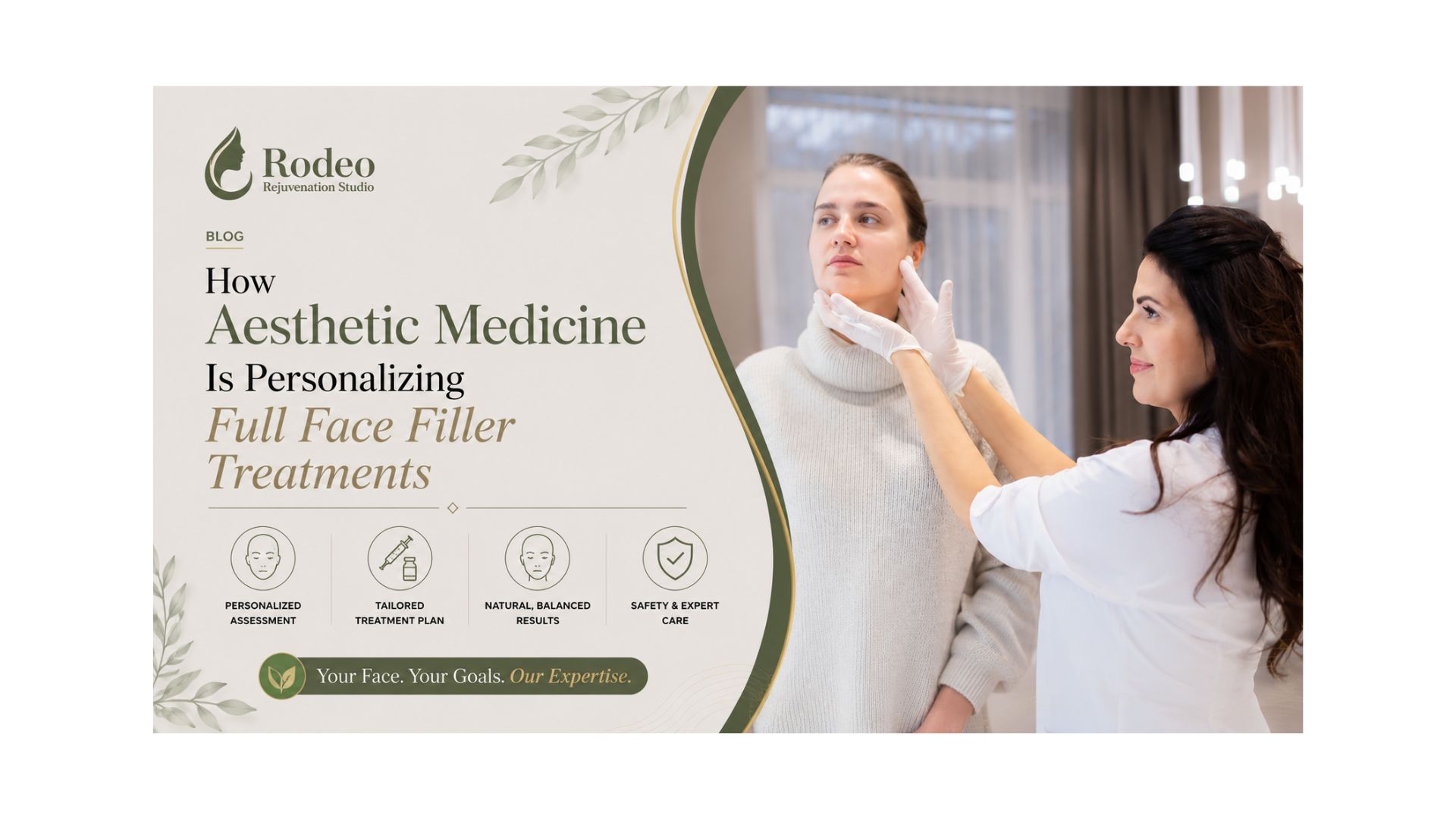
Today most of the time if you enter an aesthetic clinic the conversation will be quite a different from a decade ago. The practitioner will spend much more time with you at the consultation table, studying the facial anatomy, they will ask about your lifestyle, not only what changes you would like to see but also what parts you want to keep. This is probably one of the biggest indicators of a change in the way full face filler treatments are approached and the results only confirm the change.
According to the American Society of Plastic Surgeons, injection treatments are the most popular among the top cosmetic procedures consistently. But satisfaction with the results tells us something very important: it is not the product that determines the best results but rather your planning and placement. Personalization is no longer a marketing term; it is the clinical standard now.
What "personalized" actually means in filler treatments
"Personalized" is a term that is often casually used in the aesthetics industry and can be quite vague. However, when it comes to a full face filler procedure, it has a very precise definition: a method tailored to a person's bone structure, skin condition, aging signs, facial expressions, and their desired appearance.
Bone density, for instance, is different for everyone. Fat compartments also age at varied rates depending on one's genetic makeup. How a person smiles or squints dictates where filler would be effective and where it wouldn't be. A knowledgeable injector takes into consideration all these factors. Treatment, therefore, becomes a means of beautifying a face rather than just filling it.
This represents a major shift from old practices which used a one-size-fits-all template, i.e. the same lip design, the same cheek volume for everyone, without considering who was actually in the chair. Most of the overdone, artificial results that people fear arose from this very mode of thinking.
The role of FDA-approved products in treatment planning
Dermal filler products approved by the FDA come in many forms with different features such as softness, ability to lift and their duration. Hyaluronic acid-based fillers such as Juvéderm® and Restylane® have been and still are the most popular choices for producing natural and reliable effects. Besides, these can be easily undone with hyaluronidase when the need arises. However, the actual process of personalization also involves deciding on the most appropriate pharmaceutical product for each area that will be treated.
High density gels that tend to remain intact are a better fit for delineating the angles and contours of the face such as the cheeks and jawline because these areas require volume and frontation. On the other hand, more delicate and less dense products are more suitable for treatment of sensitive areas such as the lips and under eyes as excessive density there would result in a very artificial appearance. In an ideal scenario, product selection should follow anatomy-based assessments rather than fashion-based predictions.
Apart from aesthetic appearance-enhancing dermal fillers, collagen-stimulating products like Sculptra are available nowadays and they produce effects gradually by increasing the level of collagen synthesis. This is a good option for patients who have lost substantial amounts of volume or whose skin is beginning to loosen as it is unlikely that simply one session will achieve desired results.
How reputable clinics are raising the standard of care
Personalization is a factor that is strongly influencing good clinics to change how they organize appointments. In fact, a comprehensive consultation is not just something done for the sake of it, the patient and the doctor are literally planning the treatment during the consultation. Doctors consider the skin surface, evaluate asymmetries, do a medical history check, and give the patient the floor with targeted questions. What does the patient value as a "natural" look? Which parts of the body do they dislike the most? Would they like to maintain something or maybe even correct something specific?
At Rodeo Rejuvenation Studio in Beverly Hills, the whole injectable session is based on this philosophy. Dr. Karen Toubi, who is the one that initiated the clinic, really goes patient-first as a mission of the business. Thus, each full face filler session is preceded by a personal consultation where anatomy, skin status, and personal goals become one and the same discussion. The goal is not to undo the effects of aging but to rebalance in a way that the person in the chair is still recognizable.
Such a degree of attention to detail is preserved in the technique too. For instance, different tissue depths are targeted by layering filler; areas are not treated as isolated entities but rather are blended with each other; injection angles are altered to meet individual facial geometry, all these are ruling that result in long-lasting results as opposed to the ones that do not have staying power.
Areas commonly addressed in a full face filler treatment
A complete face approach doesn't mean you have to treat everything at the same time. Rather, it involves looking at the face as a whole and working on the areas that will give the most impact. Typical treatment areas are:
- Cheeks: to bring back volume in the mid-face and enhance the face's contour
- Temples: for the hollow areas that can make the upper face look tired
- Under-eyes: to make tear trough hollows less noticeable and brighten the area
- Nasolabial folds and marionette lines: to reduce the appearance of these deeper lines around the mouth
- Lips: to enhance shape, add volume, or correct unevenness
- Jawline and chin: to define the lower face and improve overall profile
Based on the amount of correction required, a healthcare provider might suggest dividing the treatment into two or more sessions. This approach allows each area to settle before additional tweaks are made, and it avoids the risk of over-correction that can occur when too much product is injected at once.
What to expect before, during, and after treatment
Most filler sessions usually take less than
One can see the results immediately, however a slight swelling or bruising can temporarily change the final look for a few days. Most patients can return to their normal routine the same day.
Results in most cases last for 6-18 months depending on the type of product and the body region. Regularly scheduled maintenance appointments are essential in prolonging the results and perfecting them over time. For new patients, it is less risky to start with a very small amount and then build up if necessary, it could be challenging to get the face back to normal after a heavy treatment with fillers.
Any good professional will also talk about what one should do and what one should not do both before and after the procedure taking supplements, medications, and doing activities that increase the risk of bruising or affect healing. In fact, preparing and taking care of oneself after the procedure are not later additions but they are the elements of the treatment plan.
The bottom line
Full face filler treatments really have evolved from the days of overly-large results that happened to define that early period of aesthetic medicine. Those who achieve the best results nowadays know that it is the use of a touch of hand, an extensive knowledge of the anatomy, and a planning that is specific to the patient that differentiate good results from the great ones. A perfectly done treatment is not a transformation but rather a recognition. You should indeed still look like yourself, only more like you did.
If you are planning to undergo a full face filler treatment, then your top priority should be selecting a person who will spend the time figuring out your face before doing anything else. It is during the consultation that the real work takes place.
Frequently asked questions
How is a full face filler treatment different from treating just one area?
A full face approach treats the face as a unified structure rather than a collection of separate problems. Addressing volume loss, asymmetry, or structural changes across multiple zones tends to produce more balanced, natural-looking results. Treating only one area in isolation can create contrast that draws attention to everything around it.
Will this change how I look, or just refresh my appearance?
That depends on what you want , and how clearly you communicate it. A skilled injector's default is to restore what has shifted over time, not to alter your essential features. Most patients describe their results as looking rested rather than visibly "done." If bigger changes are the goal, that's a separate conversation to have in the consultation.
Is a full face treatment done in one session, or does it require multiple visits?
It varies. Some patients get where they want to be in a single session. Others prefer to space things out across two or more appointments, which lets each area settle before adding more. Your provider will recommend a timeline based on how much correction is involved.
How do I know if fillers are the right option for my concerns?
A consultation with an experienced injector is the right starting point. Volume loss, hollowing, and deep static lines tend to respond well to fillers. Lines that appear primarily with movement are often better addressed with a neuromodulator like Botox , many patients benefit from a combination of both. A good practitioner will be straightforward about what different approaches can and can't realistically do.
What should I look for when choosing a clinic?
Look for licensed, medically trained providers with documented experience in injectables. A thorough consultation, clear communication about realistic outcomes, and transparency about products being used are all good indicators. Before-and-after photos from the actual practice , not stock images , are worth looking at. Be cautious of unusually low pricing; product quality and injector skill both matter, and both affect how safe and effective your results will be.